BLUF (Bottom Line Up Front): Choose Surgical Tech (CST) if you want to be “in the thick of it,” handling instruments and maintaining the sterile field throughout the entire surgery. Choose Anesthesia Tech (Cer.A.T.) if you prefer a mix of equipment troubleshooting, faster patient turnover, and working closely with the head of the bed (airway management). Surgical Techs generally earn slightly more ($62k+), but Anesthesia Techs often report a more varied, “support-hub” style of work.
Introduction
The Operating Room (OR) is a high-stakes environment where every second counts. If you are looking to enter this world without becoming a surgeon or nurse, two of the most popular paths are Surgical Technology and Anesthesia Technology.
At a glance, they might seem similar—both require scrubs, both work in surgeries, and both ensure patient safety. However, their day-to-day realities, educational hurdles, and “sterile boundaries” are vastly different.
In this guide, we break down the 2026 outlook for both careers to help you decide which “Inn” of technical education is the right fit for your personality and goals.
💡 Inn-Sider Tip: If you are claustrophobic, think twice about Surgical Tech. You will spend 8–12 hours a day standing under hot lights in a heavy gown, mask, and gloves. Anesthesia Techs generally have more freedom to move between the OR and the pharmacy/supply room.
The Core Mission: Sterile Field vs. Airway Support
The primary difference between these roles is where they stand and what they touch.
Surgical Technologists are the guardians of the sterile field. They are “scrubbed in,” meaning they must follow strict aseptic protocols to ensure no bacteria enter the patient’s incision. They are the surgeon’s right hand, passing instruments and managing the surgical site.
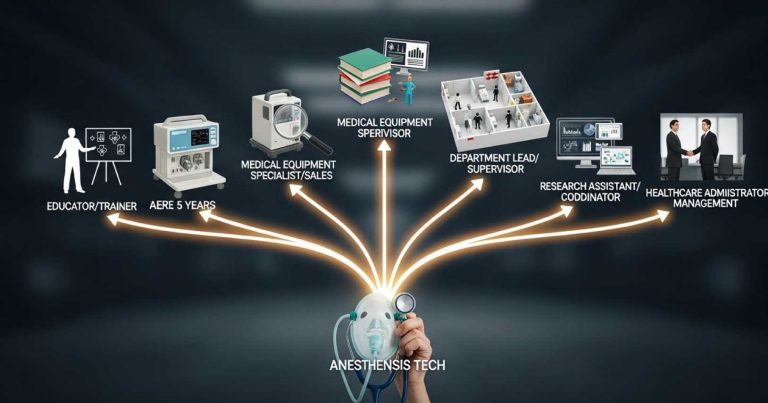
Anesthesia Technicians, on the other hand, are the guardians of the equipment. They work in the “non-sterile” area at the head of the bed. Their mission is to ensure the anesthesia machines, monitors, and drugs are ready for the anesthesiologist to keep the patient safe and asleep.
Salary & Job Growth Outlook (2026)
Both roles offer a strong return on investment, with job growth projected to outpace the national average through 2034.
| Metric | Surgical Technologist (CST) | Anesthesia Technician (Cer.A.T.) |
| Median Annual Salary | $62,830 | $57,500 |
| Top 10% Earners | $90,700+ | $85,000+ |
| Projected Job Growth | 5% (Faster than average) | 5% – 8% (Growing demand) |
| Shift Flexibility | High (mostly 8/10/12 hr shifts) | Medium (often involves “Call” shifts) |
Data Sourced from Bureau of Labor Statistics (BLS) and Industry Surveys.
Day-to-Day Responsibilities: A Side-by-Side Comparison
| Feature | Surgical Tech (The “Scrub”) | Anesthesia Tech (The “Support”) |
| Patient Interaction | Minimal (patient is asleep when you’re busiest) | Moderate (pre-op and during intubation) |
| Main Task | Passing instruments & suturing support | Machine setup & gas/drug management |
| Sterility | Must be scrubbed & gowned | Not scrubbed (Clean but not sterile) |
| Stress Profile | Steady, intense focus for hours | Burst-based stress (intubation/emergencies) |
| Movement | High (standing in one spot for hours) | High (running between rooms/pharmacy) |
Education and Certification: How Fast Can You Start?
Both careers typically require a 1–2 year commitment.
Becoming a Surgical Tech
- Education: Most states and employers require a CAAHEP-accredited Associate Degree (2 years).
- Certification: You must pass the CST (Certified Surgical Technologist) exam offered by the NBSTSA.
- Cost: ~$10,000 – $30,000 depending on the school.
Becoming an Anesthesia Tech
- Education: An Associate Degree is the gold standard, though some hospitals still offer On-the-Job Training (OJT) for entry-level technician roles.
- Certification: You take the Cer.A.T. (Technician) or Cer.A.T.T. (Technologist) exam through ASATT.
- Cost: ~$5,000 – $20,000 (OJT is free, but pay is lower).
Personality Match: Which One Fits You?
You should be a Surgical Tech if:
- You have high manual dexterity and can handle tiny instruments.
- You enjoy the “art” of surgery and want to watch every step of the procedure.
- You don’t mind standing for long periods in a single position.
- You have a “thick skin” for intense surgeons.
You should be an Anesthesia Tech if:
- You love troubleshooting technology and complex machines.
- You prefer a role where you move around the hospital more.
- You are interested in pharmacology and how drugs affect the body.
- You enjoy being the “unseen hero” who makes the entire operation possible behind the scenes.
Frequently Asked Questions
Q: Which job is more stressful?
A: Both are high-stress. Surgical Techs face “marathon stress” (staying focused for a 6-hour surgery). Anesthesia Techs face “sprint stress” (managing a patient who stops breathing during induction).
Q: Can I switch from one to the other?
A: Yes, but you will usually need additional training. Many of the prerequisite courses (Anatomy & Physiology, Medical Terminology) overlap, making the transition easier.
Q: Do I have to see blood? A:
Yes. Both roles deal with surgery. Surgical Techs are directly in the blood; Anesthesia Techs see it from the head of the bed and manage blood-warming equipment.
Ready to Choose Your Path?
Whether you want to be the guardian of the sterile field or the master of the anesthesia monitors, Innovation in Technical Education starts with knowing your options.