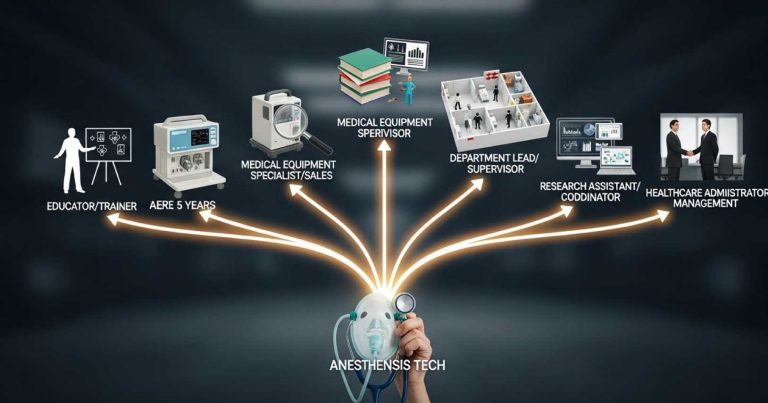
BLUF (Bottom Line Up Front): > If you prioritize a higher “paycheck,” Radiology Tech is the clear winner with a median salary of **$78,980** and multiple high-paying specialization paths (MRI, CT). However, if you crave a “sprint” style of stress with high-stakes clinical involvement in the Operating Room, Anesthesia Tech offers a unique path, though with a lower average salary ($50k–$74k) and a more physically demanding day-to-day.
Introduction
When choosing a career in the “Medical Tech” world, two names often rise to the top of the list: Anesthesia Technician and Radiology Technician (Radiologic Technologist). Both are essential to modern medicine, both require technical mastery, and both offer a “side-door” into the healthcare industry without a medical degree.
But the “vibe” of these two jobs couldn’t be more different. One involves the dark, quiet focus of imaging suites and high-volume “churn,” while the other puts you in the center of the OR, managing the high-stakes machinery that keeps patients alive and asleep.
In the spirit of Innovation in Technical Education, we’re breaking down the “Paycheck Battle” and the “Stress Reality” of these two giants for 2026.
The Paycheck Battle: Who Earns More?
If your primary goal is maximizing your hourly rate, Radiology Tech is currently the stronger financial bet. Because imaging is a primary revenue generator for hospitals, the compensation reflects that demand.
| Metric | Anesthesia Tech (Cer.A.T.) | Radiology Tech (RT) |
| Median Annual Salary | $55,000 – $61,000 | $78,980 |
| Top 10% Earners | $85,000+ (Technologists) | $110,000+ (MRI/CT Specialization) |
| Entry-Level Wage | $21 – $25 / hr | $30 – $38 / hr |
| Career Ceiling | Moderate (mostly flat) | High (easy to jump to MRI/NM) |
The Radiology Advantage: Once you are an RT, you can “cross-train” into CT, MRI, or Interventional Radiology (IR). Each of these certifications typically triggers a $5–$15 per hour raise. Anesthesia Techs, unfortunately, have fewer lateral moves to increase their pay without going back to school for nursing or AA roles.
Stress Levels: “Sprint Stress” vs. “Churn Stress”
“Stress” is subjective, but in healthcare, it comes in two distinct flavors.
Anesthesia Tech: “Sprint Stress”
In the OR, 90% of your day is routine setup. However, the other 10% is pure adrenaline. When a patient has a “Difficult Airway” or a “Code Blue,” the stress is immediate and life-threatening.
- The “Yell” Factor: Surgeons and Anesthesiologists can be intense under pressure. You need a thick skin.
- The Physical Toll: You are constantly moving, lifting heavy gas cylinders, and reaching for IV poles.
Radiology Tech: “Churn Stress”
The stress in Radiology isn’t usually “life or death,” but it is relentless. You are expected to process a high volume of patients every hour.
- The “Back-to-Back” Pressure: You have a waiting room full of people and a physician asking for “wet reads” immediately.
- Repetitive Motion: Positioning heavy patients and moving large X-ray arms can lead to shoulder and back issues over time.
Education Hurdles: How Fast to the Finish Line?
| Role | Typical Education | Time to Degree |
| Radiology Tech | Associate Degree (CAAHEP) | 24 Months |
| Anesthesia Tech | Certificate or Associate Degree | 12 – 24 Months |
Radiology programs are notoriously competitive. Many have waitlists and strict GPA requirements. Anesthesia tech programs are fewer in number but often easier to enter if you find one in your area.
What Real Techs Say on Reddit
We scoured r/Radiology and r/anesthesiology to find the ground-level truths:
- On Radiology: “It’s like taking a test for 8 hours straight. You have to follow instructions exactly to get the image right. If you’re an introvert who likes puzzles, it’s perfect.”
- On Anesthesia: “It’s a stepping stone job. I love the OR vibe, but I’m only here while I finish my prerequisites for AA school. The pay is too low to be an end-game career for most.”
💡 Inn-Sider Tip: On Reddit, “Anesthesia Tech Culture” is often described as hit-or-miss. Some hospitals treat you like a clinical partner; others treat you like an “expensive housekeeper.” Always ask about the “Scope of Practice” during your interview.
The “Innovation” Edge: AI’s Impact on the Roles
At TechEdInn, we track how technology makes these jobs “worth it.”
- Radiology AI: AI is already “reading” scans to flag emergencies. In 2026, AI helps Rad Techs by automatically suggesting the best “exposure” settings, reducing the need for “re-takes.”
- Anesthesia AI: “Closed-loop” systems are starting to automate drug delivery, which changes the tech’s job from “prepping syringes” to “monitoring the AI monitor.”
Frequently Asked Questions
Q: Which job is harder on the body? A: Anesthesia Tech. You are constantly bending, crawling under drapes, and pushing heavy machines. Radiology Techs have physical demands (lifting patients), but it is more predictable.
Q: Can I travel in both? A: Yes. Both have high-paying travel contracts. However, Travel Rad Techs are in much higher demand and have more choices of locations.
Q: I’m an introvert—which should I pick? A: Radiology Tech. You spend 5–10 minutes with a patient, get the image, and move to the next. In Anesthesia, you are part of a tight-knit, often “loud” surgical team all day.
Final Verdict: The “Inn-Sider” Choice
- Choose Radiology Tech if you want a stable, high-paying career with a clear path to $100k through specialization.
- Choose Anesthesia Tech if you want to be in the “heart” of the OR and plan on using the role to move into higher medical education (CRNA, AA, or PA).